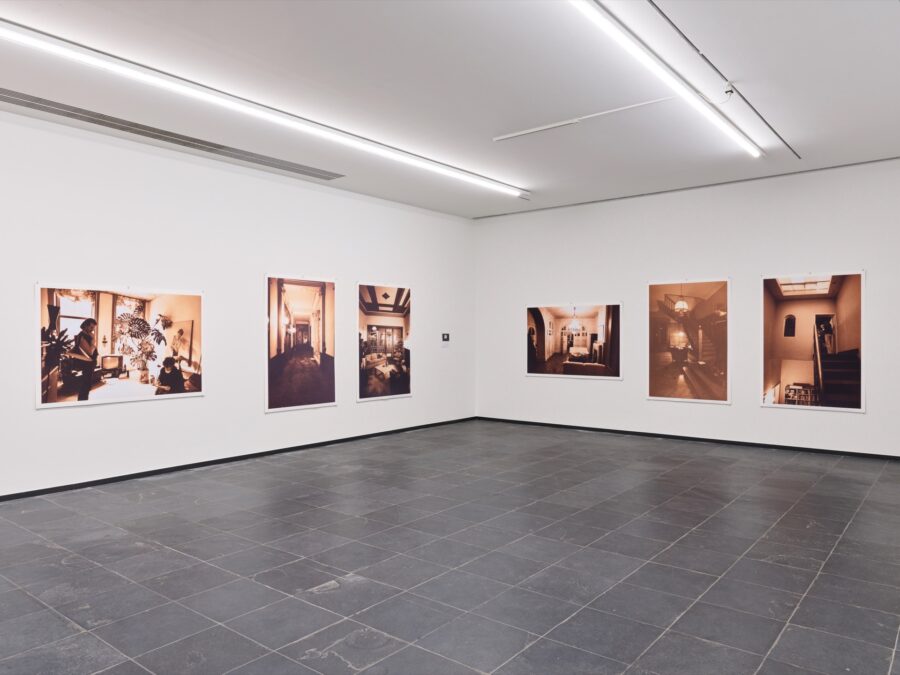
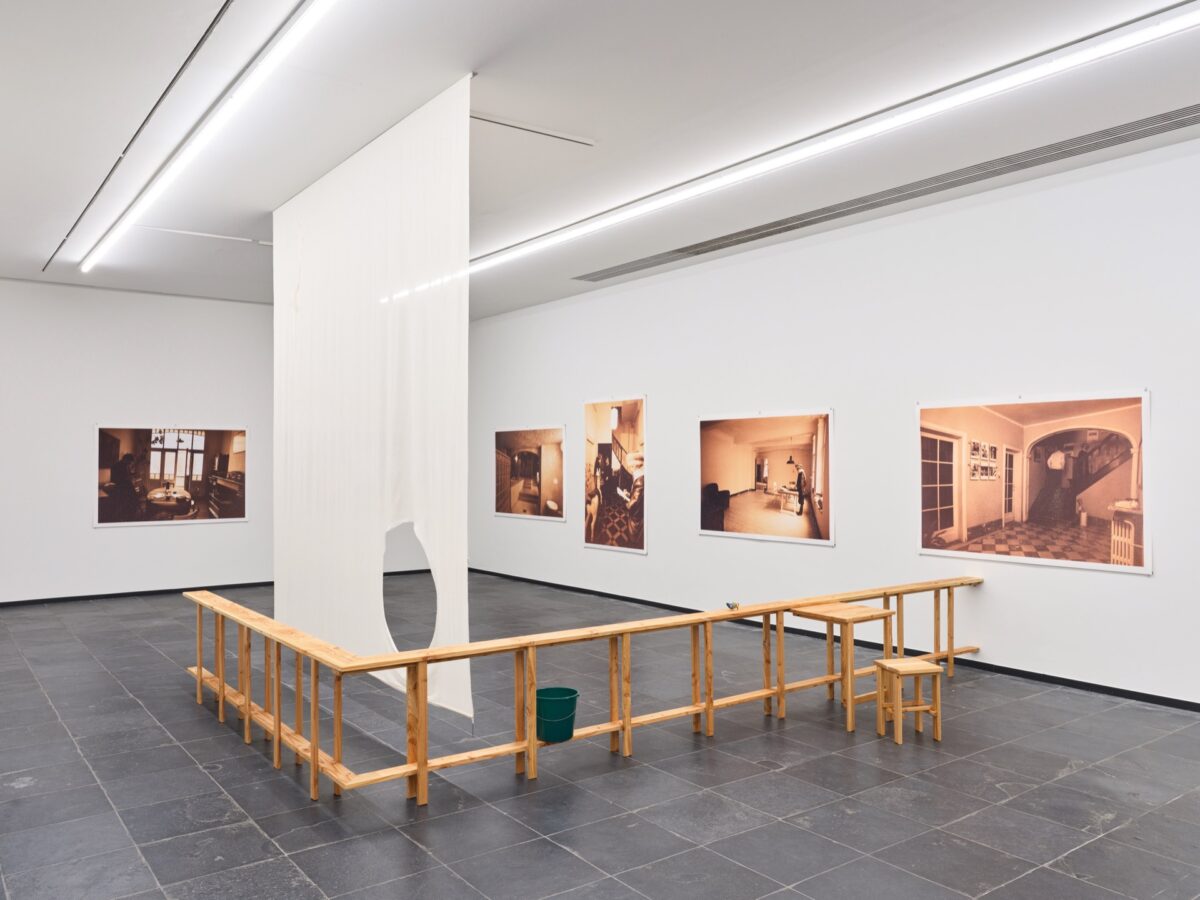
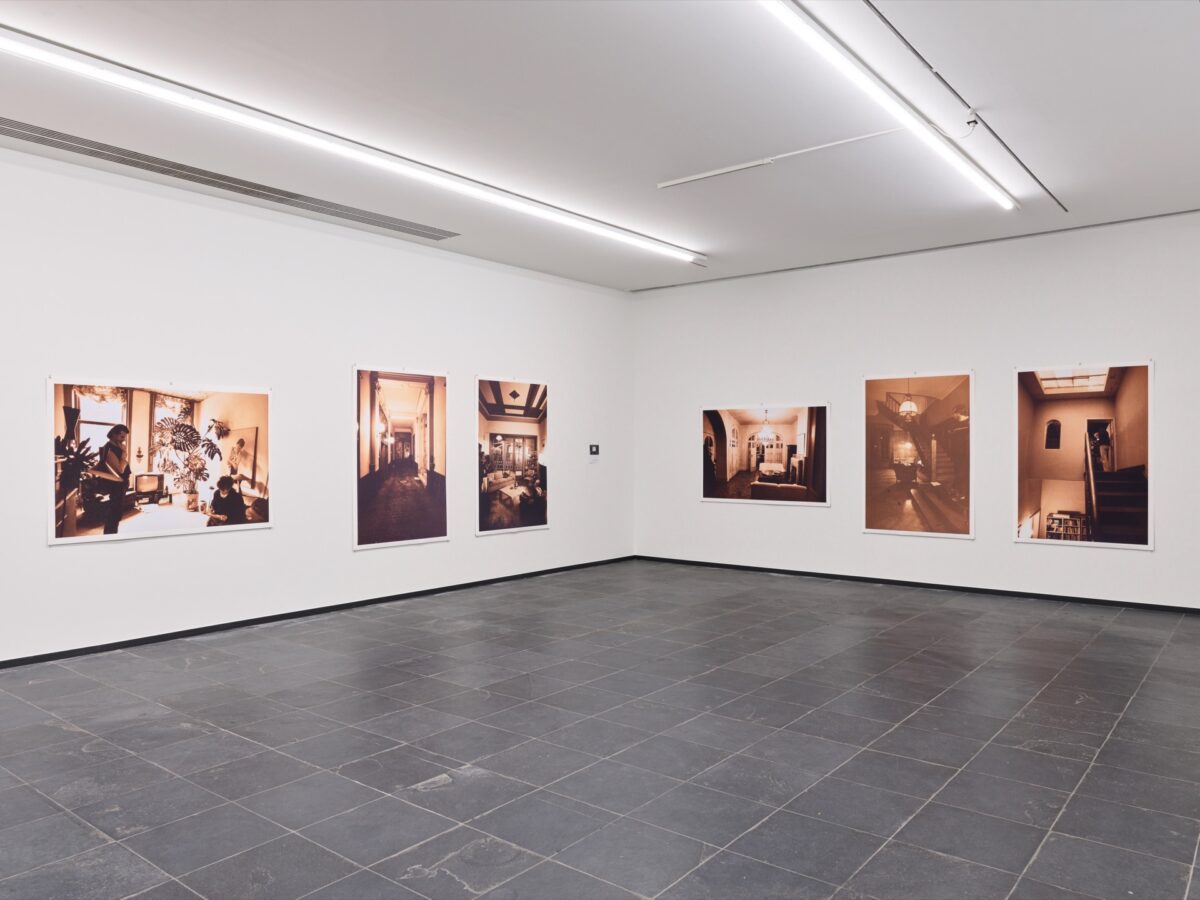
On 26 April 1986, the worst nuclear disaster in history occurred with the explosion of reactor 4 at the Chernobyl nuclear power station. This event made a profound impression on Susanne Kriemann (b. 1972, Erlangen, Germany). The idea that something invisible can nevertheless be harmful – such as the fine particulate matter released during a nuclear disaster – influenced Kriemann’s conceptual work related to ‘Chambres d’Amis’. The title of the work, ‘04261986 (abbiamo aperto una finestra)’ (We have opened a window), refers both to the fragility of opening or closing a window in the period following the nuclear accident, and to Carla Accardi’s work featured in ‘Chambres d’Amis’ in 1986. From the S.M.A.K. archive, Kriemann selected seventeen archival photographs that allowed participating artists to form a preliminary impression of the private space where their artwork would be displayed back then in time. Before having the selected photographic images enlarged and re-developed, Kriemann sprinkled them with fine dust collected in Ghent.
Alongside the photographs, Susanne Kriemann is exhibiting a number of objects. These are not original works of art from 1986, but objects that refer to a detail or element from several pieces in ‘Chambres d’Amis’ exhibition. Linen, a bucket, a little bird, a table and a chair, paint dripping from a wall… Just like the photographs of the empty interiors, which are awaiting the artworks, these objects are ‘waiting’ for their status as art. Kriemann’s installation creates a sense of anticipation: what preceded ‘Chambres d’Amis’ in 1986? What happened during the exhibition? And what memory of this show will the viewer take away with them?
In her body of work, Susanne Kriemann usually begins with extensive archival and source research. Photography is often her starting point. She explores how certain historical facts and events were depicted – as she does here for ‘Chambres d’Amis’. All the images in this installation exist in a sort of ‘in-between zone’, between past and future, private and public, and interior and artwork.




-
S.M.A.K. - Ghent, Belgium, May 30th 2026 to 10th January 2027 -

-

S.M.A.K. - Ghent, Belgium, May 30th 2026 to 10th January 2027 -

-

-
S.M.A.K. - Ghent, Belgium, May 30th 2026 to 10th January 2027 -

-

-

-

S.M.A.K. - Ghent, Belgium, May 30th 2026 to 10th January 2027 -

-

-

-

-
